

 |
ON TO GETTYSBURGGeneral Robert E. Lee & Lieutenant General James LongstreetChambersburg, Pennsylvania — June 30, 1863 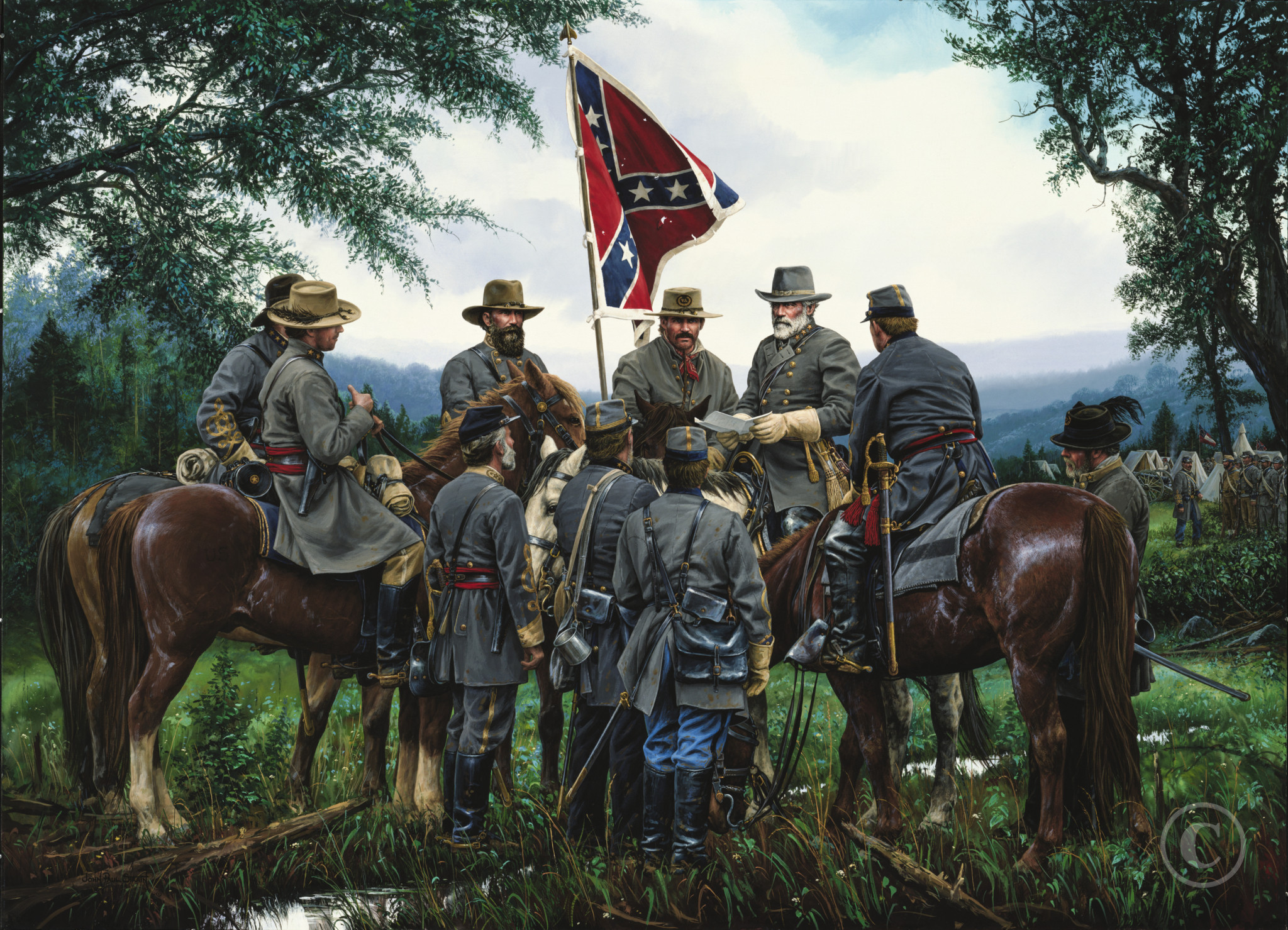
By the morning of June 30, 1863, General Robert E. Lee’s Army of Northern Virginia was deep in Pennsylvania. The campaign had carried Confederate columns north through the Cumberland Valley, with elements of the army moving toward Harrisburg and the Susquehanna River. Lee hoped to gather supplies, threaten important Northern cities, and draw the Union Army of the Potomac away from Virginia. The situation suddenly changed when Lee received vital information concerning the movements of the Federal army. With his cavalry commander, General J.E.B. Stuart, still absent and Lee deprived of his usual source of reconnaissance, news that the Army of the Potomac was much closer than previously believed forced him to reconsider his plans. Orders went out for the widely separated Confederate corps to concentrate east of the mountains in the vicinity of Cashtown and Gettysburg. In “On To Gettysburg,” General Lee meets with Lieutenant General James Longstreet and members of his staff as the changing military situation is discussed and the army prepares to turn eastward. Within hours, Confederate columns would be moving toward the small Pennsylvania crossroads town whose name would soon become forever associated with the greatest battle of the American Civil War. The following morning, July 1, the first shots would be fired west of Gettysburg. What began as an unexpected encounter between advancing elements of two great armies would grow into three days of desperate fighting that would determine the course of the campaign—and become one of the defining moments of American history. Lithographic Prints
|  |

 |
SHARE THIS SITE: |
All Illustrations - Copyright© 2001-2021 by JOHN PAUL STRAIN TM - All rights reserved. No part of the contents of this website may be reproduced or utilized in any form by any means without the written consent of the artist. |
817.560.2143
Contact Us |