

 |
BURNING THE TRESTLE AT WOODSTOCKGeneral Stonewall Jackson & Colonel Turner AshbyManassas Gap Railroad – Pugh’s Run, Woodstock, Virginia – Spring 1862 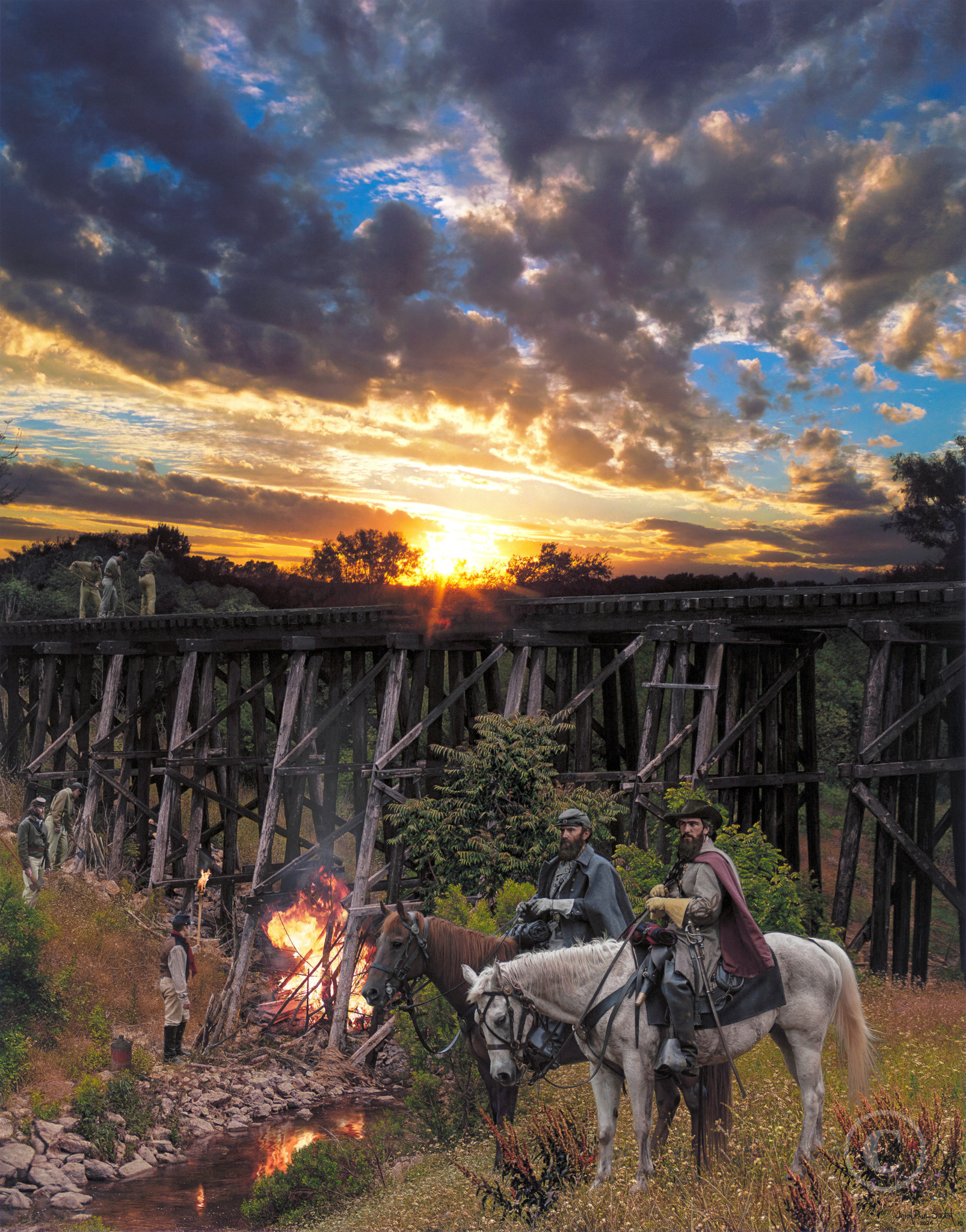
In the spring of 1862 the Shenandoah Valley became the stage for one of the most brilliant campaigns of the Civil War. Charged with protecting the Shenandoah Valley, General Thomas J. “Stonewall” Jackson maneuvered his small army with remarkable speed and secrecy, frustrating Federal attempts to advance southward. Jackson’s trusted cavalry commander, Col. Turner Ashby, and his daring horsemen constantly ambushed the enemy while reporting on their movements. Ashby also assisted Jackson in another task that the general seemed to relish—the destruction of railroads. The Manassas Gap Railroad threaded its way through the Valley from Front Royal southward through Woodstock to Mount Jackson. It served as an important Federal supply and transportation route. To deny its use to the enemy, Jackson repeatedly ordered sections of track, bridges, and trestles destroyed wherever opportunity allowed. Just north of the small town of Woodstock, the railroad crossed the clear waters of Pugh’s Run on a timber trestle built along the base of Little North Mountain. Here Confederate soldiers piled branches, brush, and debris around the base of the vertical support posts and soaked them with tar, oil, or kerosene before putting the torch to the structure. Flames quickly ran upward through the diagonal braces as the dry timbers created a chimney effect, producing tall flames rising through the bridge. Once the supports burned through, the entire trestle would collapse. Such acts of calculated destruction became a familiar feature of Jackson’s Valley operations. Iron rails were torn up, heated in great fires, and twisted around nearby trees while trestles and bridges were burned to prevent their repair. Few would remain standing. The work earned Jackson a reputation among friend and foe alike as an unrelenting destroyer of railroads. He understood that crippling an enemy’s lines of supply and easy troop movement could be as decisive as winning a battle. Jackson was so focused on this tactic that his men nicknamed him “The Old Railroad Wrecker.” As flames climbed the trestle at Pugh’s Run and smoke drifted across the valley floor, Jackson and Ashby watched the destruction of yet another vital link in the enemy’s transportation network. The two commanders prepared to move on once more, continuing their relentless campaign of maneuver and disruption that would soon make the Shenandoah Valley Campaign one of the most famous operations of the Civil War. Archival Paper Giclées
Canvas Giclées
|  |

 |
SHARE THIS SITE: |
All Illustrations - Copyright© 2001-2021 by JOHN PAUL STRAIN TM - All rights reserved. No part of the contents of this website may be reproduced or utilized in any form by any means without the written consent of the artist. |
817.560.2143
Contact Us |